Published by Virtual Fudge | AR for CPG Brands
Your packaging has three seconds to do its job. Three seconds of shelf attention before a shopper moves on, reaches for a competitor, or drops the product back on the shelf. For most CPG brands, that window closes with a static graphic and a font nobody reads.
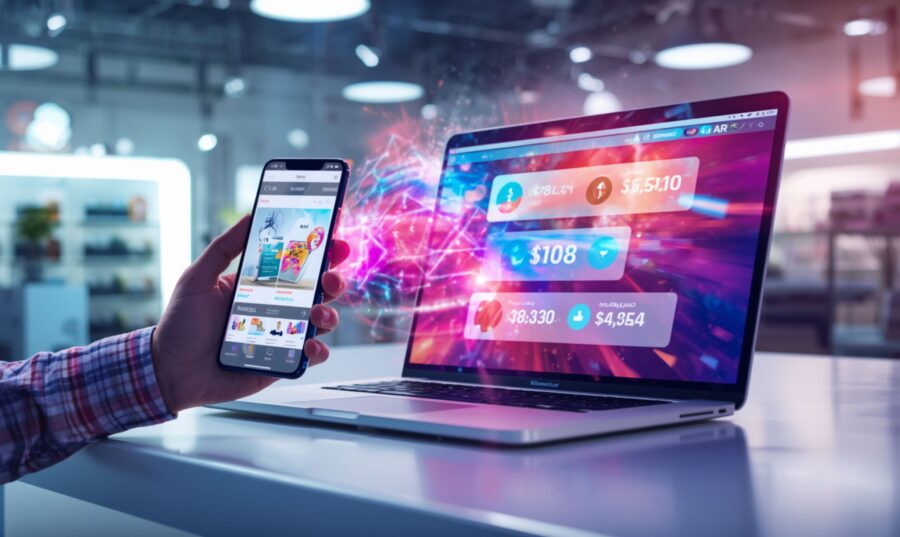
Augmented reality product packaging changes that equation entirely. A scan transforms your box into a living brand experience — animations, ingredient stories, virtual try-ons, and a direct path to purchase — all without adding a single word to the label. And it happens at the exact moment your customer has already picked up the product.
This is not a gimmick. It is the most commercially effective use of the real estate you already own.
What Augmented Reality Product Packaging Actually Does
The mechanics are simpler than most brands expect. A customer scans a QR code or image marker on the packaging with their smartphone. An AR layer appears on top of the physical product through their camera — 3D animations, video content, interactive overlays, or a virtual try-on experience. No app download required if you build on WebAR.
What that layer contains is where the strategic decisions live. The brands getting the most out of AR packaging are using it to solve specific problems: explaining a complex product benefit visually, reducing size or shade uncertainty before purchase, communicating sustainability credentials without cluttering the label, or creating a direct-to-purchase moment from the physical product itself.
The data behind this is consistent. Brands deploying AR packaging are seeing 30–60% higher dwell time as consumers engage with product demos, tutorials, and ingredient breakdowns layered over packaging. Conversion improves by 20–40% in categories where benefits require visual explanation — skincare, beauty, and wellness being the clearest examples. And AR experiences drive 70% more memory encoding than static advertising, which means your brand stays with the shopper long after the product leaves the shelf.
The Problem AR Packaging Solves for CPG Brands
The label has always been asked to do too much. Ingredients. Claims. Certifications. Directions. Legal copy. By the time a brand has satisfied regulatory requirements, there is almost no room left for the story that actually builds brand loyalty.
AR packaging separates those two jobs. The label handles compliance. The AR layer handles everything else.
For beauty and personal care brands specifically, there is a second problem: the purchase is inherently uncertain. A shade that looks perfect on the model on the front of the box may look completely different on the customer’s skin. A skincare product making claims about natural ingredients has no way to prove it mid-shelf. A first-time buyer has no way to understand whether this product is right for them without reading three paragraphs of fine print.
Virtual try-on, 3D ingredient breakdowns, and sourcing stories delivered via AR address all three of those hesitations at the moment they matter most.
How We Built This for noyah Cosmetics
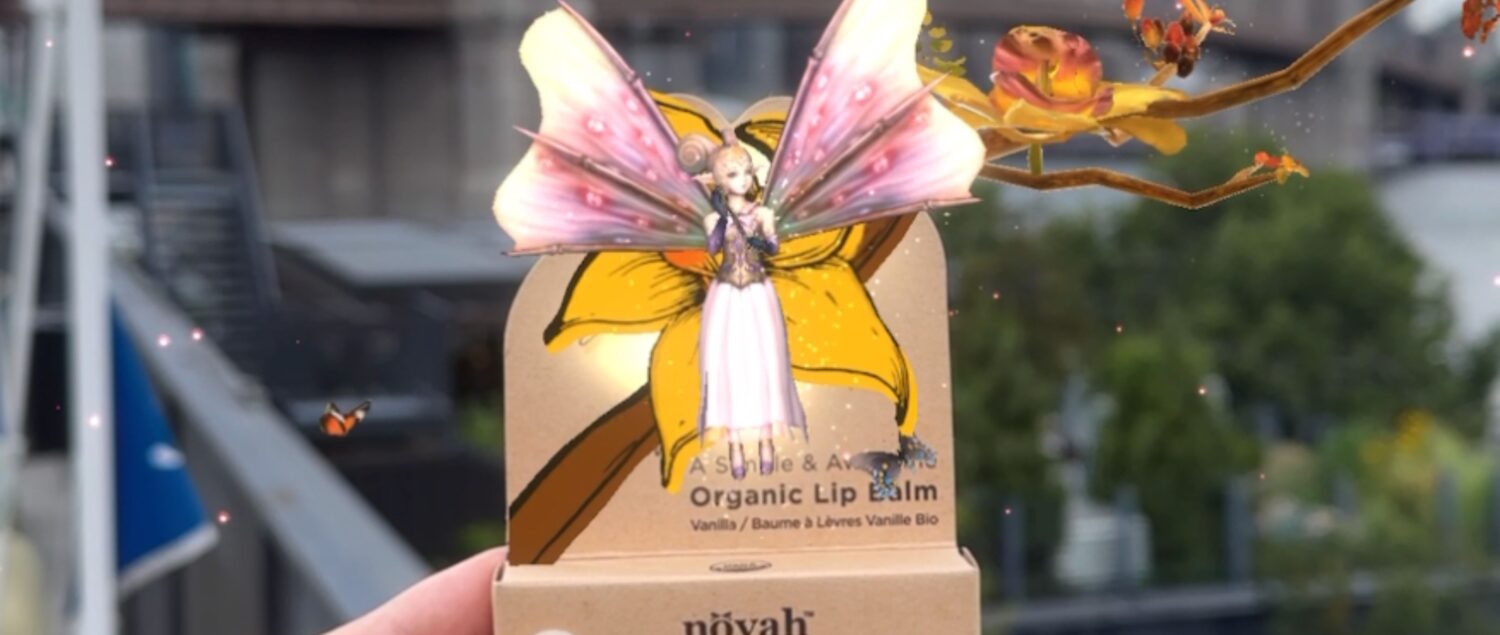
When noyah came to Virtual Fudge, they had a product worth buying and packaging that could not communicate why. The brand’s natural formulations and clean ingredient standards were genuinely differentiating — but a small label on a lip balm cannot convey molecular sourcing, sustainability commitments, and a purchase CTA all at once.
We built a marker-based and markerless AR experience that activates directly from noyah’s packaging. A scan brings the product to life: 3D animations bloom from the box, ingredient stories unfold, certifications appear in context, and a one-tap path to purchase closes the loop. For their lip color range, we added a real-time AR try-on — facial landmarking and AI shade calibration that adapts to the customer’s actual skin tone and ambient lighting, so they see exactly how the product will look on their face before they commit.
The result is packaging that functions as its own miniature sales channel. Every box noyah ships is a brand touchpoint that educates, builds trust, and drives conversion — without paid media, without a separate campaign, and without a single additional word on the label.
Five Ways CPG Brands Are Using AR Packaging Right Now
1. Ingredient transparency without label clutter Shoppers increasingly want to understand what is in their products. AR lets brands deliver full sourcing stories, certifications, and manufacturing detail to the customers who want it — without forcing it on the customers who do not. The label stays clean. The story stays accessible.
2. Virtual try-on at the shelf For beauty, eyewear, and apparel accessories, the try-before-you-buy barrier has historically required a physical tester or a returns policy. AR eliminates both. A customer can see the product on their own face, in their own lighting, before the purchase is made.
3. Education as a brand differentiator In categories like supplements, skincare, and functional food, the brand that explains why their product works earns more trust than the brand that simply claims it does. AR delivers that explanation visually, at the point of decision, in a format that is dramatically more engaging than text.
4. Direct-to-purchase from physical packaging Third-party cookie deprecation has made first-party data harder to acquire. AR packaging creates a self-identified, high-intent audience — consumers who scan are already engaged. A one-tap purchase CTA inside the AR experience converts that engagement directly, with zero paid media required to reach them.
5. Loyalty and repeat purchase mechanics Brands linking AR packaging to loyalty programs are seeing 2x higher repeat purchase intent. A scan that unlocks a reward, a refill reminder, or a personalized offer turns a transactional purchase into the start of an ongoing relationship.
What to Look for in an AR Packaging Partner
Most agencies will build you something that looks impressive at a demo. Fewer will build something that performs.
The questions worth asking before you engage anyone:
Does the experience work without an app download? WebAR has become the deployment standard for packaging activations because it removes friction entirely. If your partner is proposing a custom app as the primary access point, ask why.
Is the experience built around a specific conversion objective? The AR packaging activations that drive measurable ROI are not the ones with the most complex 3D visuals. They are the ones built around a specific user action — a try-on, a purchase, a loyalty sign-up — with a clear conversion goal from the start.
Can the experience update post-launch? Seasonal campaigns, new certifications, limited-edition product stories — a well-built AR packaging layer should be updatable without reprinting.
At Virtual Fudge, we build from the commercial objective backward. Every animation, every overlay, every interaction is there because it solves a problem for the shopper or moves them toward a decision. The experience should earn its place in the customer journey — not just exist for the sake of existing.
The Shelf Is Already in Your Customer’s Hands
The most powerful thing about AR packaging is that the distribution channel is already solved. Every unit you ship is a potential touchpoint. The product your customer is already holding is the delivery mechanism.
Most brands invest heavily in getting the product into the customer’s hands and then rely on the label to close the sale. AR packaging turns every physical unit into an active, intelligent, updatable brand channel — one that educates, builds trust, drives conversion, and collects first-party data simultaneously.
If you’re a CPG brand, beauty brand, or consumer goods company exploring what AR can do for your packaging, we’d like to show you what’s possible with your specific product.
Book a 30-minute strategy session → Or start with a 15-minute intro call →
Frequently Asked Questions
What is augmented reality product packaging? Augmented reality product packaging uses a smartphone camera to overlay interactive digital content — animations, videos, try-ons, or purchasing CTAs — onto physical packaging when a QR code or image marker is scanned. It turns a static box into an interactive brand experience.
Do customers need to download an app to use AR packaging? Not necessarily. WebAR allows the experience to launch directly in a mobile browser, with no app download required. This is now the standard deployment method for most packaging activations because it removes the primary friction point.
What kinds of brands benefit most from AR packaging? Beauty, personal care, food and beverage, supplements, and any CPG category where the product benefit is difficult to communicate on a static label. Brands with sustainability or ingredient stories to tell also see strong results.
How does AR packaging drive conversions? By reducing purchase hesitation at the moment of decision. Visual demonstrations, virtual try-ons, and social proof delivered at the shelf address the specific uncertainties that cause shoppers to put a product back down.
How long does it take to build an AR packaging experience? Timeline depends on complexity. A focused experience — ingredient story plus a purchase CTA — can be built and deployed in weeks. A full multi-feature activation like a virtual store with try-on and gamification takes longer. We scope every project individually.
Virtual Fudge is a New York City-based augmented reality studio specializing in utility-first AR for retail and CPG brands. See our work →