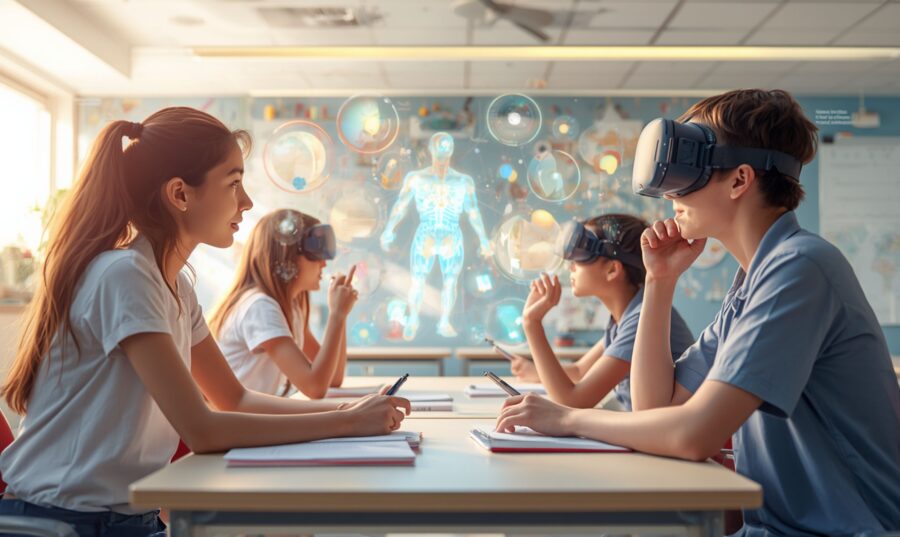
Think about the last thing you genuinely learned. Not memorized for a test, but actually retained. Chances are, you learned it by doing something, seeing something, or experiencing something firsthand. You probably did not learn it from a slide deck.
This is the problem augmented reality in education is built to solve. Not to replace instructors or add flashy visuals for the sake of it, but to close the gap between information and understanding — by making the invisible visible, the abstract tangible, and the complex something a person can actually interact with.
What was once limited to well-funded research labs is now deployable on the smartphones already in your team’s pockets. And the organizations moving on this first are not just improving learning outcomes. They are building a durable competitive advantage.
Why Traditional Training and Education Falls Short
The retention problem is not new, but the data behind it is hard to ignore. Most people forget the majority of what they learn within a week of being taught it if the learning experience is purely passive — reading, watching, or listening without interaction.
The AR in training and education market is valued at $25.5 billion in 2025 and projected to reach $73.9 billion by 2032, driven almost entirely by organizations recognizing that immersive, interactive learning produces measurably better outcomes than traditional formats. Research consistently shows AR can improve knowledge retention by nearly 40% over conventional instruction, and more than 60% of institutions using AR report higher student and trainee engagement.
The underlying reason is straightforward. AR engages multiple senses simultaneously, asks the learner to interact rather than observe, and anchors abstract information to physical objects and real-world environments. The brain encodes that kind of experience differently — and more durably — than it encodes a PowerPoint slide.
Four Places Augmented Reality in Education Is Working Right Now
1. Medical and Healthcare Training
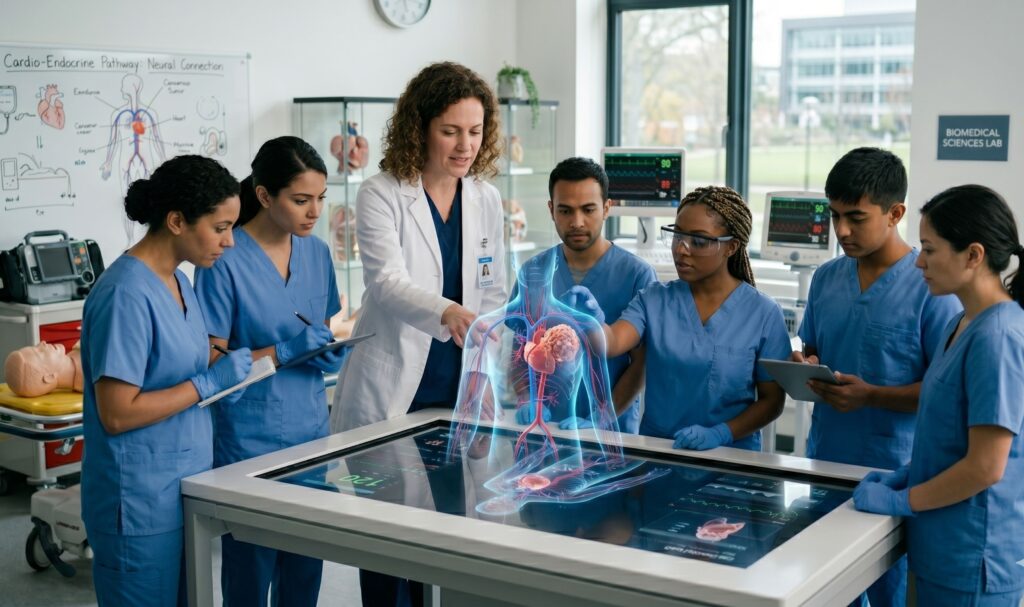
Healthcare is arguably where AR for education has the highest stakes and the clearest ROI. Complex anatomy, procedural training, and clinical protocol education have historically required expensive physical models, cadavers, or on-the-job experience that carries real risk.
AR changes the calculus. Trainees can use a smartphone or tablet to overlay anatomical systems onto a physical model — or onto their own bodies — and interact with the structures they are learning about in real time. AR-based anatomy tools have consistently improved both comprehension and retention compared to textbook-only instruction, particularly for topics requiring spatial reasoning.
At Virtual Fudge, our AR for healthcare work is built on the same visualization principles — making complex information legible in context, in the moment it is needed, without disrupting existing workflows. The same technology behind our Magic Mirror installation for Nios Skin Lab — which let clients see treatment outcomes in real time — maps directly onto clinical visualization: showing a result before it happens, anchored to the real body in front of you.
2. Corporate and Employee Training
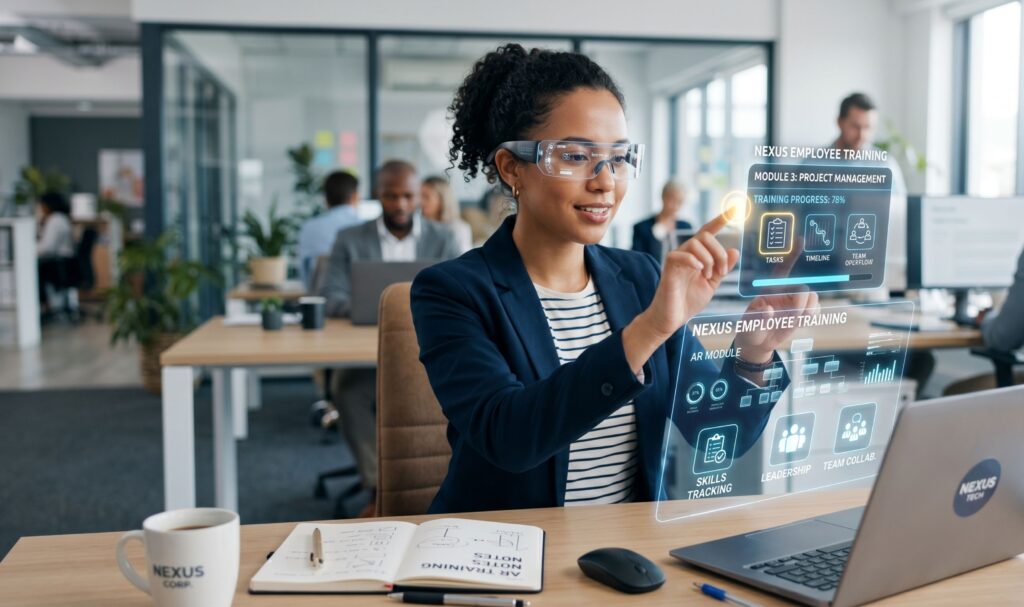
For organizations with distributed teams, complex equipment, or high-stakes procedural requirements, AR training offers something a manual or a video never can: the ability to practice, make mistakes, and learn in a realistic environment without real-world consequences.
A field technician can follow AR-guided repair instructions overlaid directly onto the equipment they are working on. A new hire in a regulated industry can rehearse compliance procedures with contextual guidance appearing in their physical environment. A sales team can walk through product knowledge with 3D models and interactive demonstrations rather than a product sheet.
AR for training is one of the fastest-growing commercial applications precisely because the ROI is measurable: faster time-to-competency, fewer procedural errors, reduced reliance on senior staff for routine guidance.

3. Consumer and Brand Education
Some of the most overlooked educational applications of AR are not happening in classrooms or training rooms — they are happening at the shelf, on the packaging, and at the point of sale.
A shopper picking up a supplement wants to understand why the ingredients matter. A patient receiving a new medical device needs to understand how to use it at home. A customer buying a technical product needs to understand what differentiates it before they commit.
AR turns the physical product into a teaching tool. Scan the packaging, and the ingredients animate into a sourcing story. Scan the device, and a step-by-step visual guide overlays onto the actual hardware. The education happens in context, in the customer’s hands, at exactly the moment they need it.
This is not a theoretical application. It is what we built for noyah — a brand whose product benefits were real but nearly impossible to communicate on a label. AR gave them a channel to teach without cluttering, explain without overwhelming, and build genuine understanding at the point of decision.
4. Experiential and Location-Based Learning
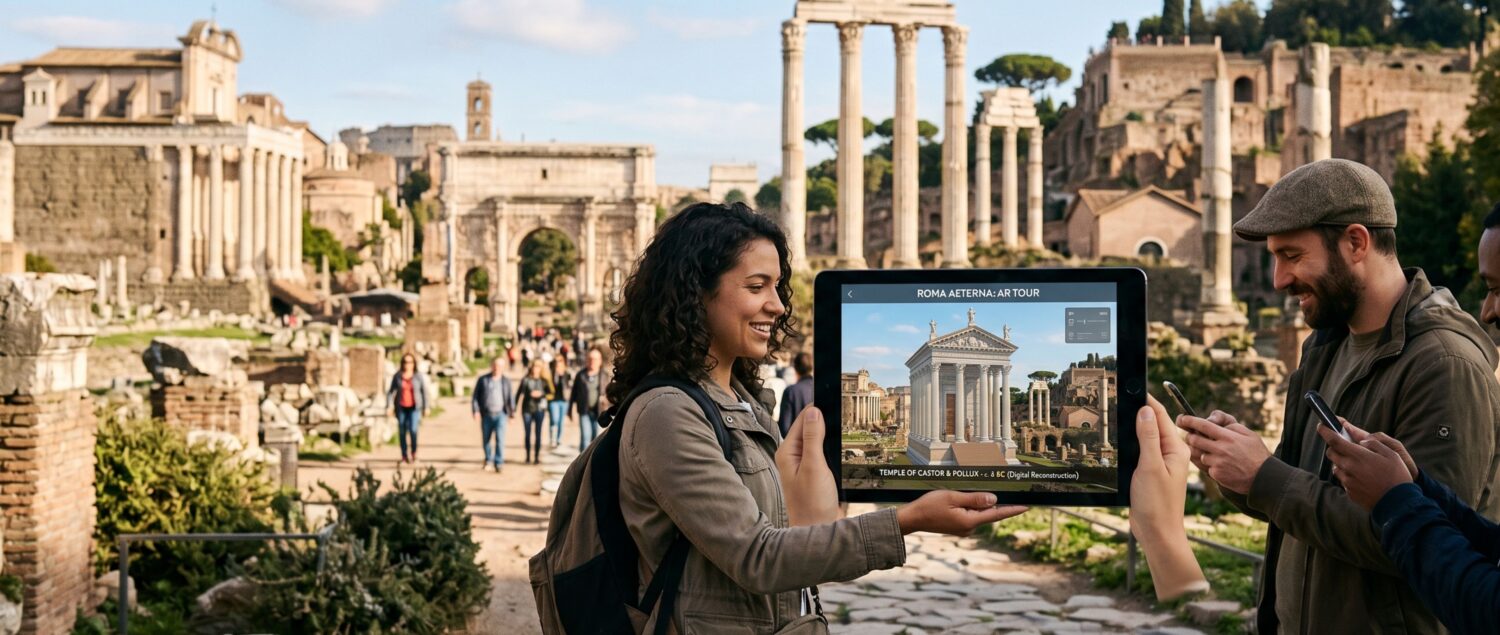
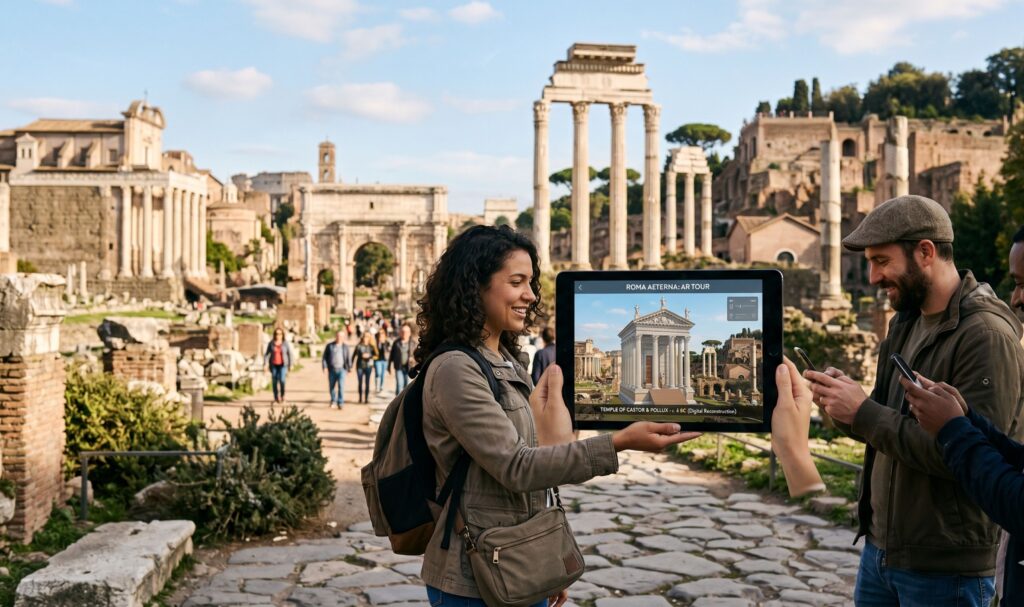
One of the original promises of AR in education was that learning could happen anywhere — not just in a room with desks. Location-based AR is now delivering on that promise in ways that range from museum guides overlaying historical context onto artifacts, to tourism experiences that reconstruct how a site looked centuries ago, to corporate campus onboarding that turns a building into an interactive orientation tool.
Our holographic business card activation demonstrated the core principle: scan a physical object and a three-dimensional, narrated experience appears in the space around it. That same mechanic — physical anchor, digital experience, zero friction — scales to any location-based educational use case.
What Makes AR Education Work (and What Wastes Everyone’s Time)
Not all AR education experiences are created equal. The ones that produce genuine learning outcomes share three characteristics.
They are built around a specific learning objective. The best AR educational experiences are not demonstrations of what AR can do. They are designed backward from a single question: what does this person need to understand, and what is the fastest, most memorable way to get them there?
They require active participation. Passive AR — watch an animation appear over a product and move on — produces novelty but not retention. AR experiences that ask the user to make a decision, interact with a component, or explore a structure produce fundamentally different cognitive engagement.
They connect to something real. AR’s advantage over pure VR or video is that the digital layer exists in the learner’s actual environment. The anatomy overlay appears on a body. The equipment guide appears on the machine. The product story appears on the physical packaging. That real-world anchor is what makes the experience stick.
The Opportunity for Forward-Thinking Organizations
The organizations investing in AR for education and training right now are not doing it because it is novel. They are doing it because passive instruction has a measurable failure rate, and they have learned that the cost of building an immersive learning experience is lower than the ongoing cost of information that does not stick.
Healthcare organizations are reducing procedural errors. Consumer brands are building genuine product literacy. Training departments are cutting time-to-competency for new hires. And the technology infrastructure to do all of it — AR-ready smartphones, WebAR that requires no app download, in-house 3D modeling and content development — is available right now.
If you are exploring what AR education could look like for your organization, brand, or product — whether that is staff training, consumer education, or something we have not covered here — we are happy to start with a conversation about your specific challenge.
Book a 30-minute strategy session → Or start with a 15-minute intro call →
Frequently Asked Questions
What is augmented reality in education? Augmented reality in education uses a smartphone, tablet, or wearable device to overlay interactive digital content — 3D models, guided instructions, visualizations — onto the real physical environment. It makes abstract or complex information tangible and interactive in a way static formats cannot.
How does AR improve learning outcomes? AR engages multiple senses simultaneously and requires active participation rather than passive observation. Research consistently shows it improves knowledge retention by around 40% compared to traditional instruction, particularly for subjects involving spatial reasoning or complex procedures.
What industries benefit most from AR training? Healthcare, manufacturing, consumer goods, hospitality, and any organization with complex procedural requirements or distributed training needs. The common thread is information that is difficult to communicate through text or video alone — AR closes that gap.
Does AR training require expensive hardware? Not anymore. Most AR educational experiences today are built for standard smartphones and tablets that teams already carry. WebAR eliminates the need for app downloads entirely, making deployment straightforward at scale.
How is AR education different from VR? VR replaces the real world entirely with a virtual environment. AR overlays digital content onto the real world. For training and education, AR’s advantage is that learning happens in the actual environment where skills will be applied — on the real equipment, in the real space, with the real product.
Virtual Fudge is a New York City-based augmented reality studio. We build utility-first AR for brands, healthcare organizations, and enterprise training teams. See our work →
Published by Virtual Fudge | AR for Training · AR for Healthcare